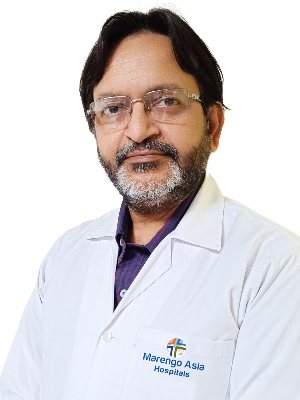
Senior Consultant Dr. Dheeraj Gupta has more than 26 years of experience in eye care and sees patients in Gurugram. Vision changes tend to creep up slowly, such as a headlight glare that never used to bother you, a thicker pair of glasses every year, or a sugar report that nobody has linked to the eyes. Ophthalmologist Dr. Dheeraj Gupta in Gurugram looks at each problem from the front of the eye to the retina at the back, explains what the examination shows, and lays out the options, with their limits, in plain words.
Qualifications
- MBBS, Jawaharlal Institute of Postgraduate Medical Education and Research (JIPMER), Puducherry (1992)
- MS (Ophthalmology), B.J. Medical College, Ahmedabad (1996)
- Observership in Medical Retina
- Fellowship in Phacoemulsification
Areas of Expertise
- Cataract Surgery, including Micro-Incision and Laser-Assisted Techniques
- FemtoLASIK and Laser Vision Correction
- Phakic IOL and ICL for High Spectacle Power
- Diabetic Retinopathy Screening and Treatment
- Ocular Trauma Surgery
- Comprehensive Eye Examination
Who to See for Eye Problems
An ophthalmologist is a medical doctor who looks after the eyes, tests vision, prescribes glasses and lenses, treats eye diseases, and performs eye surgery. An optician or optometrist can check your eyesight and fit glasses, but only an ophthalmologist can diagnose and treat eye disease. If you are looking for an Ophthalmologist near me in Gurugram, a sensible time to go is when your vision changes, when your eyes are red or painful for more than a day or two, when you have diabetes and have not had a dilated eye checkup this year, or when you are tired of glasses and want to know your options.
What Happens at Your First Eye Visit
A visit with Dr. Dheeraj Gupta begins with a conversation about your symptoms, how long you have had them, your glasses history, your medical history, especially diabetes and blood pressure, and the medicines and eye drops you use. Your vision is tested, and the front and back of the eye are examined, often with drops to widen the pupil. Those drops blur near vision and make light uncomfortable for a few hours, so avoid driving afterwards and consider bringing someone with you. Bring your current glasses, earlier prescriptions, and reports.
Signs Your Eyes Need Attention
Blurred or cloudy vision, glare around lights, difficulty seeing at night, frequent changes in glasses power, double vision, eye pain, redness, watering, itching, and headaches linked to reading or screens are all worth getting checked. Do not put home remedies or old eye drops in your eyes, and do not use steroid drops without advice, since they can cause serious damage. Floaters that suddenly increase, flashes of light, or a shadow across your vision need an urgent examination.
When the Lens Turns Cloudy
A cataract is a clouding of the natural lens inside the eye. It develops slowly, usually with age, and it can be sped up by diabetes, long-term steroid use, eye injury, and smoking. Signs include dim or yellowed colours, glare, poor night vision, and a change in glasses that does not improve vision. Glasses and brighter light may help for a time, and surgery is advised when the cataract interferes with daily life. There is no medicine or eye drop that clears a cataract, so be wary of such claims.
How Cataract Surgery Works Today
In phacoemulsification, the cloudy lens is broken into tiny pieces with ultrasound energy and removed through a very small cut, and a clear artificial lens is placed in the same bag. Because the opening is so small, it is called micro-incision surgery, and healing is usually quick, often with little or no stitching. Some centres also use a laser to perform parts of the operation, and your surgeon will explain whether it adds anything in your case. Ask about the type of lens, the expected vision with and without glasses, and the risks, which include infection, inflammation and, rarely, other complications.
Choosing a Lens for Your New Eye
The artificial lens replaces the natural one for life, so the choice matters. A standard lens gives clear vision at one distance, usually far, and most people then need reading glasses. Other lenses aim to reduce the need for glasses at more than one distance, and they come with trade-offs such as glare or halos at night. Your lifestyle, work, other eye conditions, and expectations all play a part. Ask your surgeon which lens is best for you and why, and be honest about how you use your eyes.
Getting Ready for Cataract Surgery
Your eyes are measured carefully to choose the right lens power, and your general health is checked, including blood pressure and sugar. Tell the team about every medicine you take, especially blood thinners and medicines for the prostate, and about allergies. You will be told whether to eat before the procedure, which drops to start, and who should accompany you. Control of diabetes and blood pressure before surgery helps the result. Ask every question you have beforehand.
Healing After Cataract Surgery
Most people go home the same day and see better within a day or two, though the eye may feel gritty or watery at first. Use the prescribed drops exactly as told, wear the eye shield at night as advised, and avoid rubbing the eye, swimming, and dusty places for the period you are told. Keep follow-up visits, since the eye is checked at set times. If you were treated by Dr. Dheeraj Gupta, contact the team promptly for increasing pain, redness, a drop in vision, light flashes or discharge.
Is Glasses-Free Vision Right for You
Laser vision correction reshapes the front of the eye, the cornea, to reduce or remove short-sightedness, long-sightedness and astigmatism. In FemtoLASIK, a laser creates the thin corneal flap, and a second laser reshapes the tissue underneath; some treatments use detailed maps of the cornea to tailor the correction. Not everyone is suitable. The prescription should be stable, the cornea thick enough, and the surface healthy; dry eye, certain corneal conditions, and pregnancy can make it unsuitable. Results vary; some people still need glasses, especially for reading later in life, and you should ask about the benefits, the risks, and the alternatives before deciding.
When the Prescription Is Too High for Laser
For some people with very high spectacle power, or thin or irregular corneas, laser treatment is not an option. A phakic implantable lens, sometimes called an ICL, is a thin lens placed inside the eye in front of the natural lens, without removing it, to correct high powers. It needs careful measurements and a healthy eye, and it carries its own risks, such as raised eye pressure, cataract formation, and infection, which your surgeon will explain. Regular check-ups are needed afterwards. Ask how it compares with laser and with staying in glasses or contact lenses.
Diabetes and the Back of the Eye
High blood sugar over the years can damage the tiny blood vessels of the retina, the thin light-sensing layer at the back of the eye. This is called diabetic retinopathy, and it often causes no symptoms until it is advanced, when it can lead to blurred vision, floaters, or sudden loss of sight. That is why every person with diabetes needs a dilated eye examination at least once a year, even when vision seems fine. Controlling sugar, blood pressure, and cholesterol slows the damage. Do not wait for symptoms to book a check.
Treating Diabetic Eye Disease
Treatment depends on the stage. Early disease is watched with regular checks and better control of sugar, blood pressure, and cholesterol. Laser treatment can seal leaking vessels or reduce the growth of abnormal ones, injections into the eye can reduce swelling at the centre of the retina, and surgery may be needed for bleeding or scarring in advanced cases. The goal is usually to protect the vision that remains, and treatment may need to be repeated. Ask what stage you have, what the plan is, and how often you need review.
Eye Injuries
Eye injuries from sports, accidents, crackers, tools, chemicals, or fights can threaten sight and need prompt care. For a chemical splash, rinse the eye with clean running water for several minutes and go to hospital while continuing to rinse. For a blow or a sharp object, do not rub, press, or try to remove anything stuck in the eye; cover it with a clean shield or cup without pressure and seek urgent help. Ocular trauma surgery repairs wounds of the eye, removes foreign bodies, and treats damage inside the eye. Wear protective eyewear for risky work and sports.
Tired Eyes in a Screen World
Long hours on phones, tablets, and computers can cause dry, tired, burning eyes, headaches, and blurred vision. Look at something far away for 20 seconds every 20 minutes, blink often, keep the screen slightly below eye level and use good lighting without glare. Children need outdoor time and limits on screens. If symptoms persist despite these changes, have your eyes tested, since uncorrected glasses power is a common cause.
Looking After Your Eyes Every Day
Wear sunglasses outdoors, wash hands before touching your eyes, never share eye drops, towels or make-up, and replace eye make-up regularly. Eat a balanced diet with plenty of green vegetables and fruit, avoid smoking and control diabetes and blood pressure. Have your eyes checked every one to two years, or more often if advised, and yearly after the age of 40 or if you have diabetes. Children should have their eyes tested early, since many do not realise they cannot see well.
Eye Emergencies That Cannot Wait
Go to the nearest emergency department or eye hospital straight away for sudden loss of vision, a curtain or shadow across your sight, flashes of light with a shower of floaters, severe eye pain, a red painful eye with halos around lights, a chemical splash or any injury to the eye. Do not wait for an OPD day. After eye surgery, contact the team promptly for increasing pain, redness, a drop in vision, or discharge.
Booking an Appointment
To book a consultation with Dr. Dheeraj Gupta in Gurugram, visit during OPD hours on Monday and Wednesday, 11:30 am to 2:00 pm and 4:30 pm to 6:30 pm, and on Friday and Saturday, 11:30 am to 2:00 pm. Please bring your current glasses, earlier prescriptions, reports, and a list of the medicines and eye drops you use. If you have diabetes, bring your recent sugar reports.