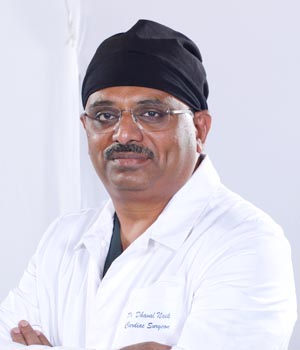
Consultant Dr. Dhaval Naik has 22 years of experience in heart surgery and practises at Marengo Asia Hospital in Ahmedabad. Being told that you or someone in your family needs an operation on the heart is one of the most frightening moments a family can face, and the questions come all at once. Many families ask to see a renowned Heart Surgeon in Ahmedabad at this point, and what they usually need most is someone who explains the problem, the choices, and the risks without hurrying. That is how he approaches every consultation, in plain words and with the family in the room.
Qualifications
- MS (General Surgery), Gold Medallist
- DNB (Cardiothoracic Surgery)
Areas of Expertise
- Coronary Artery Disease and Total Arterial CABG
- Off-Pump CABG
- Heart Valve Disease and Valve Repair
- Aortic Surgery
- Heart Failure Management
- Heart Transplant Surgery
- Ventricular Assist Devices (LVAD)
- ECMO
- Minimally Invasive Cardiac Surgery
- Heart Tumour Surgery
- Emergency Cardiac Surgery
- TAVI, TMVR and EVAR
Awards and Recognition
- Gujarat Garima Award, Government of Gujarat
- Excellence in Cardiac Surgery, BER Group, Singapore (2017)
- Dr. K. Sharan Cardiology Excellence Award for Research, Indian Medical Association (2021 to 2022)
- Most Admired Global Indians (2021)
- Gold Medal in General Surgery (2000)
Professional Memberships
- Executive Member, Society for Heart Failure and Transplantation (SfHFT)
- Vice President, Ahmedabad Medical Association (AMA)
- Past Executive Member, Indian Association of Cardiovascular and Thoracic Surgery (IACTS)
- Past Executive Member and Past Treasurer, ECMO Society of India (ESOI)
- Past Executive Committee Member, Ahmedabad Medical Association (AMA)
Medical Registration Number
G-27686
Where the Heart Surgeon Fits in Your Care
Heart care is a team effort. A cardiologist usually sees you first and treats most heart problems with medicines, tests, and procedures done through a thin tube. A heart surgeon is called in when an operation is likely to help more than other treatments, or when the problem is too complex for them. If you have typed Heart Surgeon near me in Ahmedabad into a search box after an angiogram, an echo, or a hospital admission, bring those reports to the consultation. The surgeon will go through them with your cardiologist’s advice and tell you honestly whether surgery is needed, and when.
Roles Beyond the Operating Theatre
Alongside his surgical work, he has held office in several professional bodies. He is currently an executive member of the Society for Heart Failure and Transplantation and Vice President of the Ahmedabad Medical Association, and has served on the executive committees of the Indian Association of Cardiovascular and Thoracic Surgery and the ECMO Society of India, where he was also treasurer. Work like this keeps a surgeon in touch with colleagues and with changes in the field, which matters in an area that moves as fast as heart surgery.
Your First Meeting With the Surgeon
A consultation with Dr. Dhaval Naik begins with a conversation about your symptoms, how long you have had them, your medical history, your diabetes, blood pressure and smoking, and the medicines you take. He will examine you and go through your angiogram, echo, ECG, and blood reports. Further tests may be suggested before any decision. Please bring the actual angiogram discs or films as well as the reports, along with your earlier discharge summaries, and a family member who can listen with you.
Blocked Heart Arteries and Bypass Surgery
When the arteries that feed the heart muscle are badly narrowed, blood flow falls, causing chest pain, breathlessness or a heart attack. Coronary artery bypass grafting (CABG) creates new routes around the blockages, using vessels taken from the chest wall, the arm or the leg. The choice between medicines, a stent, or bypass depends on where the blockages are, how many arteries are affected, how well the heart pumps, whether you have diabetes, and what you prefer. In complex or multiple blockages, bypass surgery is often discussed. Ask why one option is advised over another.
Total Arterial and Off-Pump Bypass in Plain Words
In total arterial bypass, only arteries, usually from the chest wall and the forearm, are used as grafts, not leg veins. Arteries tend to stay open for longer, which is why surgeons consider this option for suitable patients, particularly younger ones. In off-pump surgery, the operation is done on the beating heart, without the heart-lung machine. Neither approach suits everyone, and the right choice depends on your arteries, your heart, and your general health, so ask your surgeon to explain what is planned and why.
Narrow or Leaking Heart Valves
The heart has four valves that open and close with every beat. A narrow valve makes the heart work harder to push blood through, and a leaking one lets blood flow backwards. Symptoms include breathlessness, tiredness, swelling of the feet, palpitations, chest discomfort and fainting. Mild problems are watched with regular echo tests. When surgery is advised, the valve may be repaired where possible, or replaced with a mechanical or tissue valve. Keeping the natural supporting structures of the valve wherever possible helps the heart work better afterwards, and your surgeon will explain which approach suits you.
Valve Treatment Without Open Surgery
Some valve problems can be treated without opening the chest in the usual way. TAVI (transcatheter aortic valve implantation) places a new valve inside a narrowed aortic valve through a blood vessel, and TMVR (transcatheter mitral valve replacement) does the same for the mitral valve in selected patients. These options are mostly considered for patients who are older or have other illnesses that raise the risk of surgery. Not every patient or valve is suitable, so the decision is made by a heart team after detailed scans.
Smaller Cuts for Heart Operations
Minimally invasive cardiac surgery (MICS) uses smaller incisions between the ribs, instead of cutting through the breastbone, for suitable operations such as some valve repairs and bypass procedures. It may mean less pain, less blood loss, a smaller scar, and a quicker return to normal life for the right patient. It is not suitable for everyone, and sometimes the standard approach is safer. Ask whether it is an option in your case and what the advantages and limits would be.
When the Aorta Needs Attention
The aorta is the body’s main artery. An aneurysm is a bulge in the wall of the aorta that can grow silently for years and may burst, while a dissection is a tear in the inner wall that is a medical emergency. Sudden severe chest or back pain, often described as tearing, with sweating or fainting, needs emergency care. Smaller aneurysms are watched, and larger ones may need open surgery or a stent graft placed through a blood vessel (EVAR, for the abdominal aorta). High blood pressure, smoking, and family history raise the risk, so ask about screening if relatives have had aortic problems.
Heart Failure and a Weak Heart Muscle
Heart failure means the heart is not pumping as well as the body needs, and it can result from earlier heart attacks, valve disease, long-standing high blood pressure or diseases of the heart muscle called cardiomyopathies. Symptoms include breathlessness, difficulty lying flat, swelling in the legs and tiredness. Most people are managed with medicines, less salt, fluid advice and regular follow-up. When the heart becomes very weak despite the best treatment, advanced options such as heart support devices or a transplant are considered. Tell your doctor early if breathlessness worsens or you gain weight quickly.
Machines That Support the Heart
ECMO takes blood from the body, adds oxygen, and returns it, giving a very sick heart or lungs time to recover. A left ventricular assist device (LVAD), sometimes called an artificial heart pump, helps a weak heart pump blood and may be used while waiting for a transplant or, in some patients, as a longer-term treatment. Cardiogenic shock, in which the heart suddenly cannot supply enough blood to the body, is one situation where such support may be life-saving. These treatments need a highly trained team and careful watching for bleeding, clotting, and infection. Ask why a machine is being used, what it is expected to do, and for how long.
Heart Transplant, What Families Should Know
A heart transplant is considered when the heart is failing, and other treatments are no longer enough. It needs a full assessment of the heart and the rest of the body, a suitable donor heart, and a strong support system at home. Transplants in India follow a legal process, including approvals and donor allocation rules. After the operation, medicines to prevent rejection are needed for life, with regular tests and follow-up visits. If you or a family member might need a transplant, ask early about the assessment and what lies ahead.
Growths in and Around the Heart
Tumours of the heart are rare. Some are not cancerous, but they can still block blood flow or break off and travel, causing symptoms such as breathlessness, fainting, palpitations or a stroke. Cysts can also form on or in the heart. These are usually found on an echo or scan, and surgery is often needed to remove them. Your surgeon will explain what has been found, why surgery is advised and what the risks are.
When Heart Surgery Cannot Wait
Some conditions, such as a tear in the aorta, a major heart attack with complications, a ruptured valve, or sudden shock, need emergency surgery within hours. In an emergency, the team moves quickly, and a family member will be asked for consent. If time allows, ask what the problem is, what will be done, what the main risks are, and what the alternatives are. After the operation, the team will explain what was found and what to expect next.
Preparing for Heart Surgery
Your doctor will explain why surgery is advised, what it involves, what the risks are and how long recovery will take. Before the operation, you will have blood tests, an ECG, an echo, a chest check and an anaesthesia assessment. Bring all your earlier reports, angiogram discs and a full list of your medicines, especially blood thinners, aspirin and diabetes medicines, since some must be adjusted. Stopping smoking, even a few weeks beforehand, lowers the risk of complications. Practise deep breathing, and arrange help at home for the first weeks.
The First Days After Surgery
After heart surgery, you are cared for in a cardiac ICU, where monitors track the heart rhythm, blood pressure, oxygen, and breathing around the clock. Tubes, drips and drains each serve a purpose and are removed as you improve. Most patients are helped to sit and walk within a day or two, and breathing exercises are important for the lungs. Ask the team how often updates are given, and nominate one family member to receive them.
Recovery at Home and Cardiac Rehabilitation
Recovery continues for weeks after discharge. You will be told how to look after the wound, how to protect the breastbone while it heals, when to start walking and when you can return to work, drive and resume normal activities. Take your medicines exactly as prescribed, including any blood thinners, and never stop them on your own. Cardiac rehabilitation, a supervised programme of exercise and education, is worth asking about. If you were treated by Dr. Dhaval Naik, keep every follow-up visit, since tests and medicine changes are planned around them.
Research and Case Reports
He has written several papers in cardiac surgery journals. They include case reports on a giant cyst eroding the wall of the heart, a rare tumour in the right atrium, dengue fever after bypass surgery in a patient with a weak heart and a large hydatid cyst removed from the heart muscle, as well as a review of the drug levosimendan, a study of medicines for a fast heart rate after bypass surgery and a report on late infection of a coronary stent. Publishing unusual cases helps other doctors recognise and treat them.
Heart Symptoms That Cannot Wait
Go to the nearest emergency department straight away for chest pain or pressure lasting more than a few minutes, severe breathlessness, fainting, sudden tearing pain in the chest or back, a very fast or irregular heartbeat with dizziness, or sudden weakness on one side or trouble speaking. After surgery, contact the team promptly for fever, redness or discharge from the wound, a clicking or moving breastbone, increasing breathlessness, rapid weight gain with swelling, or chest pain. Do not wait for an OPD day.
Booking an Appointment
To book a consultation with Dr. Dhaval Naik at Marengo Asia Hospital in Ahmedabad, visit during OPD hours from Monday to Saturday, 8:30 am to 5:00 pm. Please bring your earlier ECGs, echo reports, angiogram discs and reports, discharge summaries and prescriptions, along with a list of all the medicines and supplements you take.